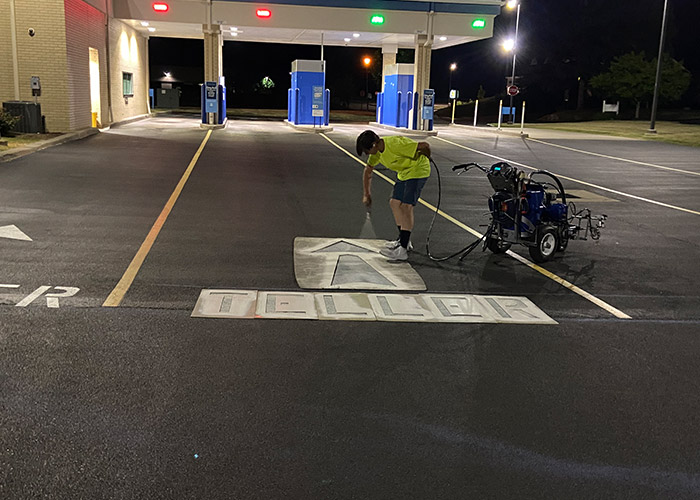
Ensuring accessibility in public spaces is not just a legal requirement but also a moral obligation. One critical aspect of making these spaces accessible is through ADA compliant parking lot striping. The Americans with Disabilities Act (ADA) stipulates specific guidelines for parking lot design to accommodate individuals with disabilities. Properly marked parking spaces are essential for the convenience and safety of everyone, especially those with mobility challenges. This article delves into the importance of ADA compliant striping and the standards that must be adhered to in order to create inclusive environments.
Understanding ADA Compliance for Parking Lots
ADA compliance in parking lot striping involves adhering to specific guidelines that ensure accessibility for individuals with disabilities. These guidelines cover:
- Number of Accessible Spaces: There is a required minimum number of accessible parking spaces based on the total number of spaces in the lot.
- Space Dimensions: Accessible spaces must have adequate width to accommodate wheelchair users and their vehicles.
- Signage: Clear and visible signage is required to mark accessible parking spaces.
- Adjacent Access Aisles: These are necessary to allow wheelchair movement and vehicle access.
For a comprehensive understanding of these requirements, explore further insights here.
Designing an ADA Compliant Parking Lot
Strategic Placement of Accessible Spaces
When designing a parking lot, it?s crucial to place accessible spaces in the most convenient locations. These should be:
- Close to building entrances or accessible routes.
- Situated to minimize travel distance for individuals with disabilities.
- Located on the shortest accessible route to the entrance.
For more strategic design considerations, read more about this topic.
Maintaining Visibility and Safety
Visibility is crucial for both safety and compliance. This includes:
- Using high-contrast colors for striping to ensure visibility in various weather conditions.
- Regular maintenance to prevent fading and ensure markings remain clear.
- Implementing reflective materials for better visibility at night.
To ensure ongoing compliance, learn more in this detailed guide.
Benefits of ADA Compliant Parking Lot Striping
Implementing ADA compliant striping not only meets legal requirements but also offers several benefits:
- Enhanced Accessibility: Ensures that individuals with disabilities can access facilities safely and comfortably.
- Increased Safety: Clearly marked paths reduce the risk of accidents for all users.
- Legal Compliance: Helps businesses avoid potential fines and legal issues.
To maximize these benefits, find additional information here.
Conclusion
ADA compliant parking lot striping is a fundamental aspect of creating accessible and inclusive environments. By adhering to ADA guidelines, property owners can ensure that their parking facilities meet the needs of all users, promoting safety and compliance. Regular maintenance and strategic design play vital roles in maintaining these standards. For more resources and guidance on ADA compliance, explore further insights here.